Home / Markets
Seven markets, and what each one actually buys.
Ports served, indicative transit, the agreement that sets the duty, and the lines that genuinely move on each lane.
The lanes we work.
Transit times below are indicative port-to-port ocean legs. They exclude origin consolidation, terminal cut-offs, transhipment dwell and destination clearance — we confirm every one against the carrier's live schedule before it goes on a proforma.
- Fremantle → Singapore
- Fremantle → Port Klang
- Melbourne → Singapore
- Melbourne → Tanjung Priok
- Melbourne → Laem Chabang
- Sydney → Singapore
- Sydney → Ho Chi Minh City
- Brisbane → Ho Chi Minh City
- Darwin → Tanjung Priok
- Fremantle → Manila
Relay services into secondary ports add three to seven days at the transhipment hub, usually Singapore or Port Klang. August to October and the weeks before Lunar New Year run longer.
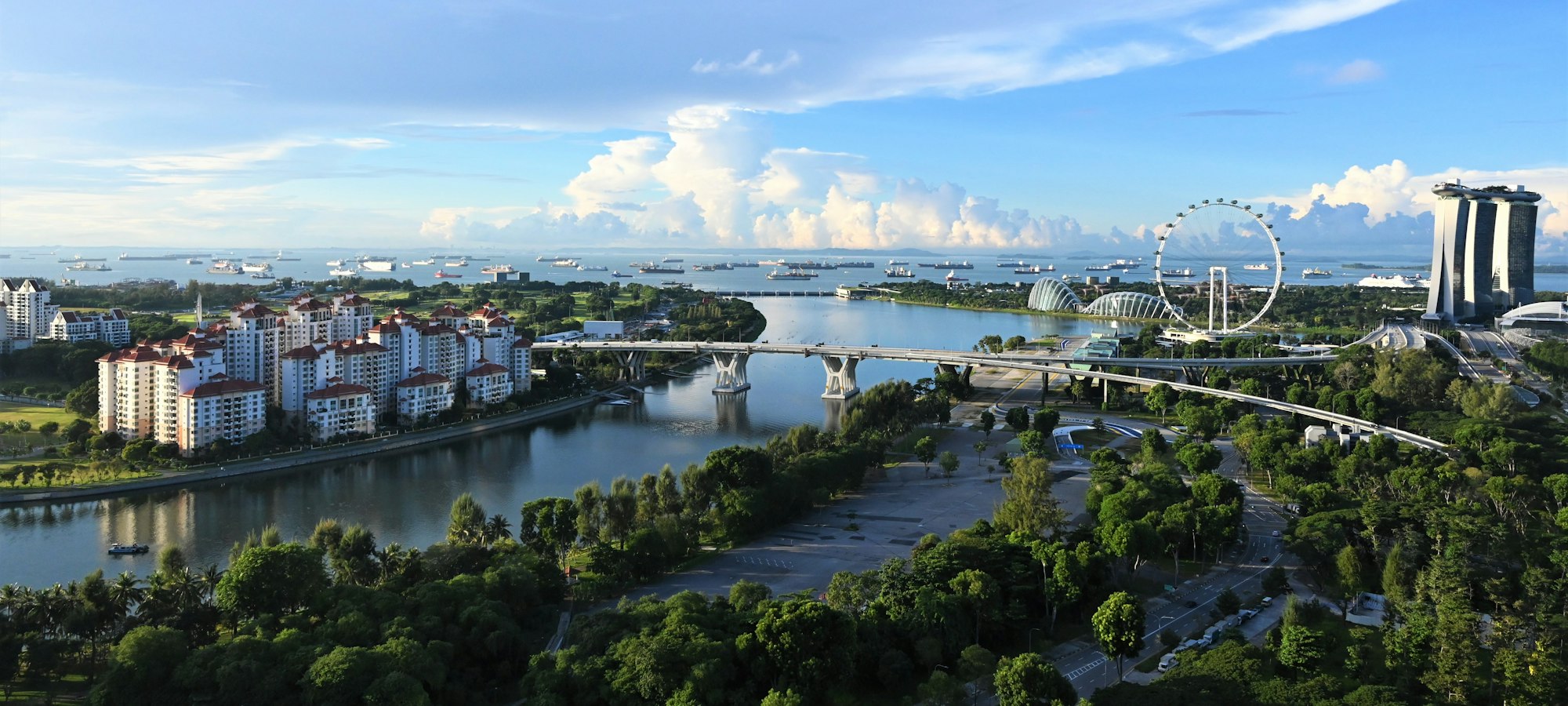
Singapore
The region's transhipment, re-export and trade-finance hub, and the place most secondary-port cargo on this corridor relays through. It is also where a confirming bank sits when an issuing bank's country risk is a concern.
- Ports — PSA Singapore
- Transit — 11–17 days ex Fremantle, Melbourne, Sydney
- What moves — Wine, premium food, dairy, live seafood by air, re-export consolidations
Malaysia
Halal documentation is the whole game for food. Only a certificate from a body recognised by JAKIM is accepted for imported product carrying a halal claim, and Malaysian importers expect the documentation in Malay as well as English.
- Ports — Port Klang · Tanjung Pelepas
- Transit — 12–14 days ex Fremantle
- What moves — Red meat, dairy, copper, aluminium, coal, wheat
Indonesia
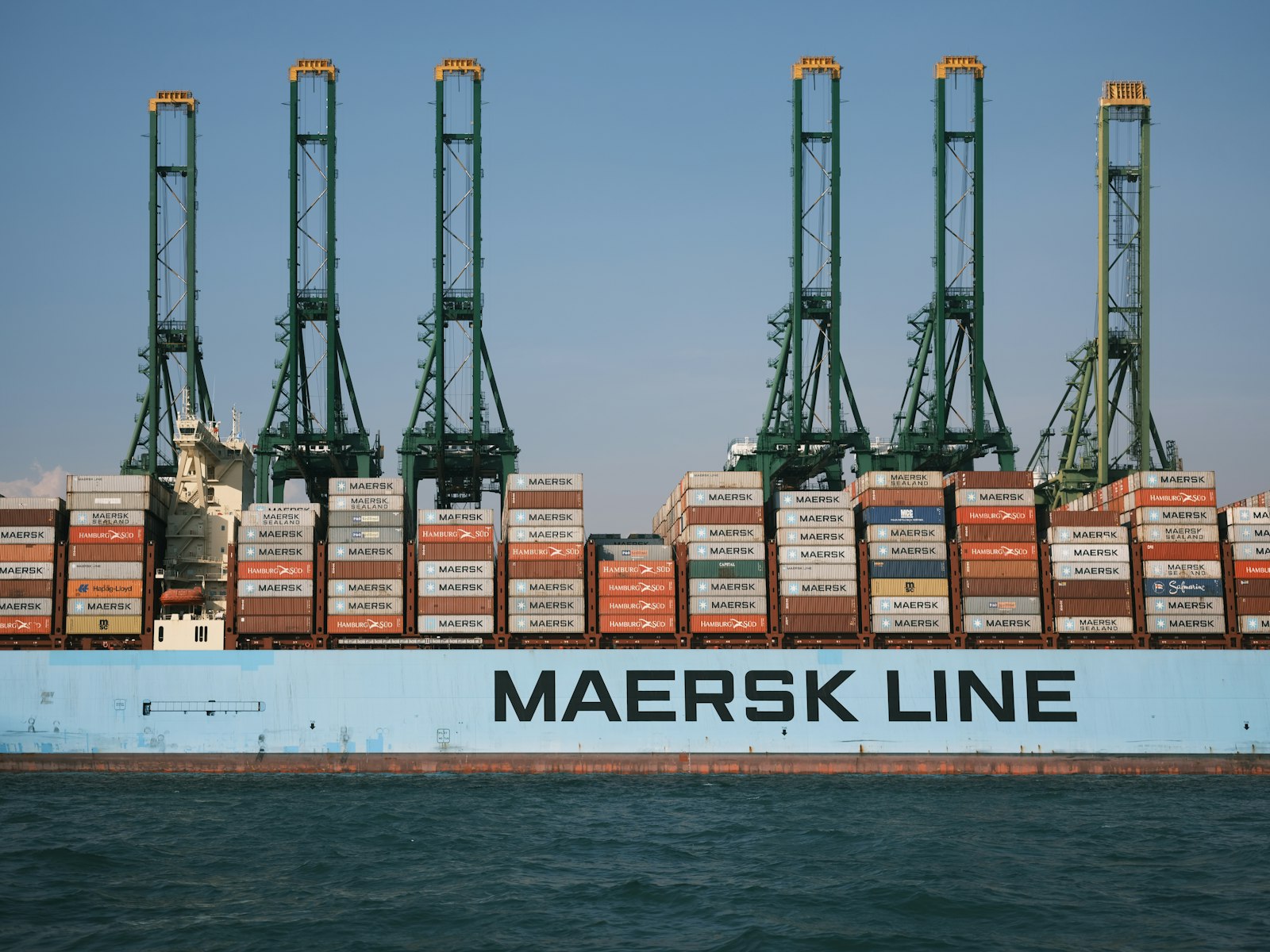
Australia's largest wheat market and its largest red meat and live cattle partner in the region. Under IA-CEPA the overwhelming majority of Australian-origin goods now enter duty free. Mandatory halal certification under BPJPH takes effect for food and beverages on 17 October 2026 — plan certification lead time into the shipment window, not after it.
- Ports — Tanjung Priok · Tanjung Perak · Belawan
- Transit — 5–7 days ex Darwin · 14–18 days ex Melbourne
- What moves — Milling wheat, boxed and live beef, skim milk powder, coal, iron ore
Vietnam
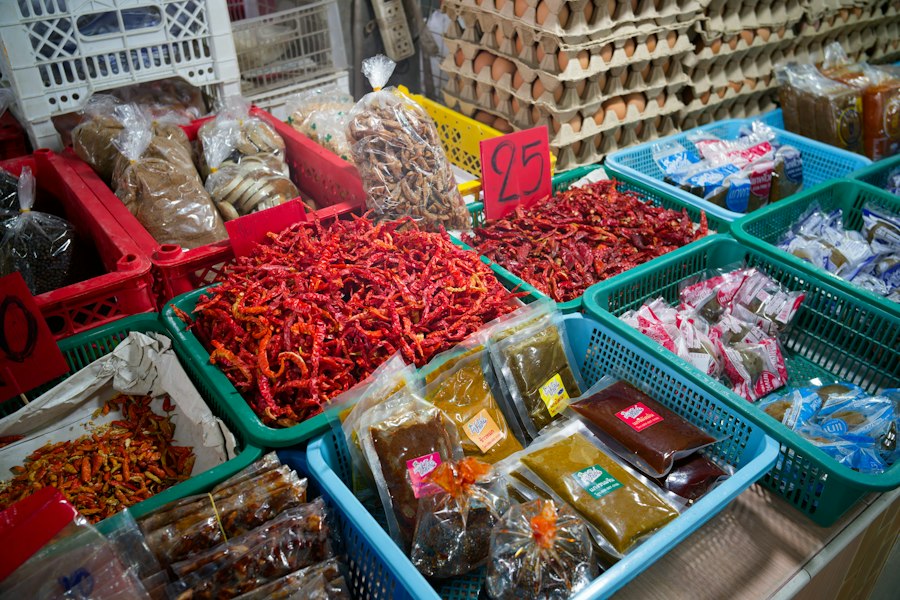
The fastest-growing lane in the corridor, and the clearest raw-material-out, finished-goods-back loop: Australian cotton lint feeds Vietnamese spinning mills, and apparel, footwear and furniture come back. Three agreements are available on most lines, so the origin work is worth doing carefully.
- Ports — Cat Lai · Cai Mep · Hai Phong
- Transit — 14–19 days ex Brisbane, Sydney
- What moves — Coal, iron ore, cotton, aluminium, wheat, dairy and nutritional powders
Thailand
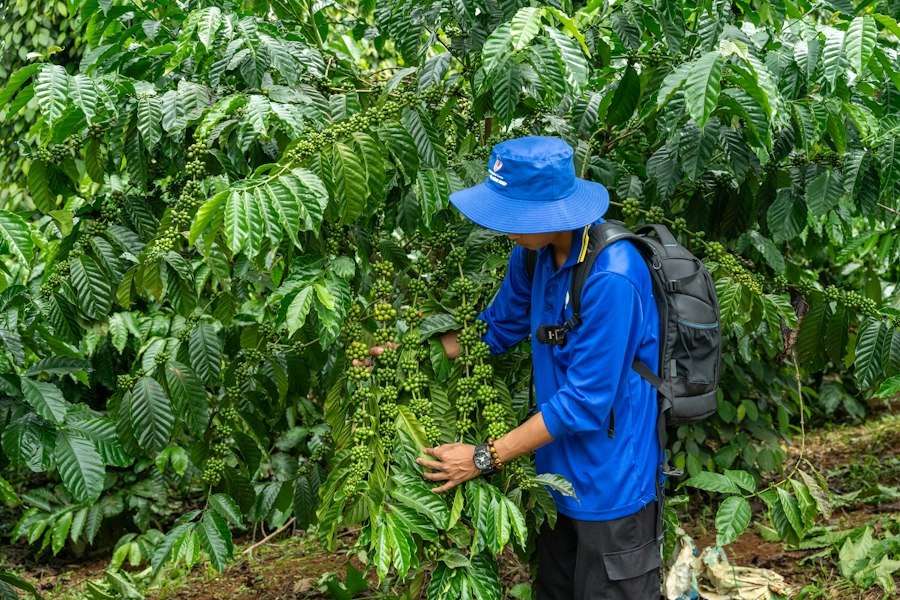
In force since 2005, and a lane that runs heavier inbound than out — Thailand is a top-five source of Australian imports, mostly vehicles, air-conditioning equipment, canned seafood and rice. Thai buyers search and correspond in Thai, and expect a high register.
- Ports — Laem Chabang
- Transit — 17–21 days ex Melbourne
- What moves — Wheat, copper, aluminium, LNG out; rice, processed food, rubber, A/C equipment back
Philippines
The one Southeast Asian market where Australian beef sits in the national top six imports, alongside a very large milling wheat trade. B2B runs in English here, so speed of reply counts for more than almost anything else — though this site reads in Filipino if you would rather it did.
- Ports — Manila (MICT / South Harbor) · Subic · Batangas
- Transit — 13–17 days ex Fremantle
- What moves — Milling wheat, beef, dairy, minerals

Brunei
Small volumes, relayed through Singapore or Port Klang. Worth running as consolidated mixed-SKU containers rather than as part cargo, and halal documentation applies as it does in Malaysia.
- Ports — Muara
- Transit — Via Singapore or Port Klang relay
- What moves — Food and beverage consolidations, red meat, dairy
Six agreements, and the one that wins is rarely obvious.
For a single Australia–Vietnam shipment you may be able to claim under AANZFTA, RCEP or CPTPP. They carry different rules of origin, different forms and different phase-out schedules. We run all of them against the HS code before quoting.
| Agreement | In force | Covers | Why it matters here |
|---|---|---|---|
| AANZFTA | 1 January 2010 | ASEAN, Australia, New Zealand | The regional backbone — one origin rulebook across twelve economies. The Second Protocol, in force through 2025, simplified the rules of origin so more regional content counts, and adopted a revised Form AANZ. |
| RCEP | 1 January 2022 | ASEAN plus Australia, NZ, China, Japan, Korea | The widest cumulation zone available on this corridor — content originating in any RCEP party counts toward origin. Its declaration of origin can be in free format provided it carries the minimum information requirements. |
| IA-CEPA | 5 July 2020 | Indonesia | The overwhelming majority of Australian-origin goods enter Indonesia duty free or under significantly improved arrangements; Australia eliminated its remaining tariffs on Indonesian goods at entry into force. |
| MAFTA | 1 January 2013 | Malaysia | Bilateral cover that sits alongside AANZFTA — on some lines it beats the regional rule, on others it does not. Worth checking both. |
| TAFTA | 1 January 2005 | Thailand | Australia's first bilateral agreement with a mainland Southeast Asian economy, and still the better route on a number of Thai tariff lines. |
| SAFTA | 28 July 2003 | Singapore | Plus the Australia–Singapore Digital Economy Agreement. Duty is rarely the issue into Singapore; documentation for onward re-export usually is. |
Three ways a good qualifies — and one way the claim dies.
Under AANZFTA and RCEP a good originates if it is wholly obtained, meets a regional value content test — commonly RVC 40 — or undergoes the specified change in tariff classification. Many product-specific rules are drafted as "RVC40 or CTH", which gives the exporter a choice worth taking.
The claim usually dies on direct consignment. Almost everything on this corridor tranships at Singapore or Port Klang, and the goods must stay under customs control with no operation beyond unloading, reloading, splitting and preservation. We keep the through bill of lading or a non-manipulation certificate from the transhipment port on every preference claim, because it is the most common reason customs refuses one.
- Wholly obtained — grain, beef, wool, ores. No calculation required.
- Regional value content — build-down or build-up, commonly 40% of FOB.
- Change in tariff classification — at chapter, heading or subheading level.
- De minimis tolerance, usually 10% of FOB value, for a failed CTC.

Tell us what you need, and by when.
Send the product, the quantity, the destination port and the shipment month. You get an indicative offer — or an honest no — in the first reply.