698324248 PTY LTD Australia · Southeast Asia
An inspector checking goods against a specification.

Home  /  Quality & compliance


The paperwork is the product.

Goods can be perfect and the shipment can still fail. This page is the document set, the inspection regime, the terms we trade on and what happens when something goes wrong.

Document set

What travels with every consignment.

Not every document applies to every line. The ones that do are listed on the proforma before you open a credit, so there is no discovery at presentation.

Commercial invoice

The goods description has to correspond with the credit. UCP 600 does not demand a mirror image of the wording — ISBP 745 says so — but anything that conflicts with the credit is a discrepancy, not a technicality, and the bank has five banking days to find it.

Packing list

Carton count, net and gross weight per line, dimensions, marks and the numbered bolt seal. The seal number carries onto every subsequent document.

Bill of lading

Original set of three where title must be negotiable; sea waybill or telex release where it need not. For containerised cargo under FCA, Incoterms® 2020 allows the parties to agree that the buyer instructs the carrier to issue an on-board bill to the seller.

Certificate of Origin

Form AANZ, RCEP or the relevant bilateral form, issued through the ACCI chamber network or Ai Group — or a declaration of origin where approved-exporter status applies. This is the document your customs broker presents to claim the preference.

Health or phytosanitary certificate

Generated through DAFF's EXDOC system. The wording must match the importing country's agreed certificate text exactly; a mismatch means the container sits at quarantine.

Halal certificate

From a body recognised by JAKIM for Malaysia, or under the BPJPH regime for Indonesia. Importers verify these against the certifier's register, so we name the certifying body before you order.

Inspection and analysis certificates

Certificate of quality, weight or analysis from SGS, Intertek, Bureau Veritas or Cotecna where the contract or the credit calls for one. Draft survey for bulk; tally and sampling for containers.

Fumigation and ISPM 15

Methyl bromide or phosphine treatment certificates for grain, plant products and timber packaging; ISPM 15 marked pallets and dunnage are effectively universal on this corridor.

Insurance certificate

Issued where we sell CIF or CIP. Standard practice is cover at 110% of CIF value, with Institute War and Strikes Clauses added separately.

VGM declaration

Mandatory under SOLAS and, in Australia, AMSA Marine Order 42. Method 1 — weighing the packed sealed container — is required for cargo whose components cannot be individually weighed, such as unbagged grain.

Incoterms® 2020

The rule decides who carries the risk — and who carries the insurance.

We quote against a named place, always: "FCA Melbourne, Incoterms® 2020", never a bare "FOB". A price without a rule and a place is not a price.

RuleRisk passesWhere it fits on this corridor
FOBOn board at the named port of loadingThe workhorse for bulk — grain, coal, ores. Also widely used for containers because buyers' credits are written around it, though FCA is technically the correct rule.
FCAAt handover to the buyer's carrier, cleared for exportThe correct rule for containerised cargo and the one the ICC recommends. Incoterms® 2020 fixed its old weakness by allowing an on-board bill to be issued to the seller.
CFROn board at load port; seller pays freightGrain and bulk sold on a delivered-freight basis.
CIFOn board at load port; seller pays freight and insuranceCommon where a buyer's bank or import licence requires seller-arranged cover. Note the default cover is Institute Cargo Clauses (C) — minimum, not all risks.
CIPAt first carrier; seller pays carriage and insurancePreferable to CIF for containerised high-value goods, because Incoterms® 2020 upgraded its default cover to Institute Cargo Clauses (A), all risks.
DAPAt the named destination, ready for unloadingGrowing on this corridor for finished goods to distributors who want a delivered price but will clear import themselves.
Payment

How the money moves.

New counterparties start at sight or against a credit. Terms extend as a record builds — that sequence is not a judgement, it is how the corridor works.

Irrevocable L/C at sight

UCP 600. The default for a first shipment or a large single parcel. We check the credit against the contract on day one — expiry, latest shipment date, presentation period, and the exact wording required on the origin and inspection certificates. An amendment costs a few hundred dollars now; a discrepancy costs the payment later.

Usance L/C, 30 to 180 days

UCP 600. The buyer takes credit, the seller can discount the accepted draft. The standard structure for repeat food and commodity buyers in the region.

Confirmed L/C

Where the issuing bank's country risk warrants it. Singapore and Hong Kong banks are the usual confirming banks on this corridor.

D/P and D/A

URC 522. Cheaper than a credit. Under D/P the buyer gets the documents only on payment; under D/A, against acceptance of a draft — which is unsecured credit, and only for an established relationship.

T/T

Deposit on order, balance against copy documents. Dominant for small and mid-size container trades here.

Open account with credit insurance

The mature-relationship structure, backed by a trade credit policy or a standby credit.

Insurance and claims

Cover, and what to do in the first hour.

Institute Cargo Clauses (A) is all risks subject to named exclusions and is what we recommend for anything high-value or perishable — wine, meat, dairy, electronics. Clauses (B) and (C) are named-perils covers; (C) is the narrowest, and it is the Incoterms® 2020 default under CIF. A CIF buyer who assumes they are fully insured is usually wrong. War and Strikes Clauses are added separately in every case.

If cargo arrives damaged, the order of operations matters more than the paperwork:

  • Survey the damage before unpacking, and photograph the seal intact.
  • Note the exception on the delivery receipt at the time of delivery.
  • Notify the carrier in writing inside the Hague-Visby notice period.
  • Lodge the quality claim inside the contractual window — typically fourteen days from discharge, with an inspection report.

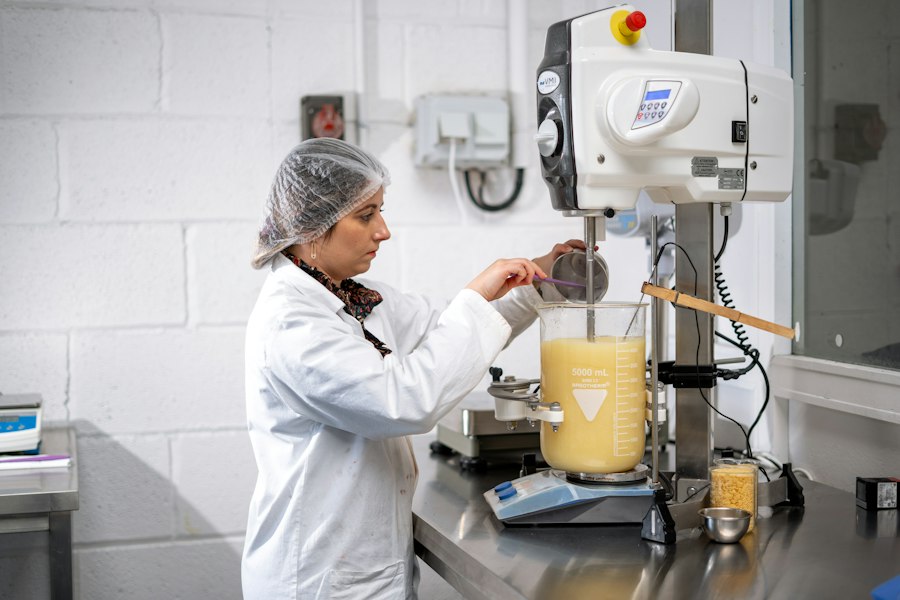
Food-safety testing in a laboratory.
Pre-shipment inspection at the buyer's option, by SGS, Intertek, Bureau Veritas or Cotecna, with container loading supervision and loading photographs on first orders.
Questions we are asked before every first order

The answers, in advance.

Can you ship on letter of credit for a first order?

Yes, and for a first order of any size we prefer it — an irrevocable credit at sight protects both sides. Send the draft credit before it is issued and we will check it against the contract, which costs nothing and prevents the discrepancy that would otherwise surface at presentation.

Who pays for samples?

We supply a representative sample at our cost and you cover the courier. For lines where a sample is not meaningful — bulk grain, ores — we supply the certificate of analysis from the shipment's own survey instead.

Will you quote DDP into Indonesia or Vietnam?

Generally no. DDP requires the seller to act as importer of record, and in those two markets that is not something we will represent we can do reliably. We quote DAP and you clear, or CIF and your broker clears — which is also almost always cheaper for you.

Can we use our own inspection agency?

Yes. Name them in the contract along with the point of inspection and whose certificate is final. We will supply loading supervision access and the packing schedule ahead of the cut-off.

What tolerance do you work to on quantity?

Plus or minus five or ten per cent at seller's option depending on the line, written into the contract. For bulk parcels it is the norm; for containerised cargo we usually contract to an exact carton or bag count.

Our buyer needs the certificate of origin re-issued. Is that possible?

Retrospective and replacement certificates are possible under most of these agreements, generally within twelve months, but the importer pays MFN duty first and then claims a refund. It is far cheaper to get the form right before the vessel sails — which is why we confirm the exact certificate wording at proforma stage.

A container terminal at sunset.

Tell us what you need, and by when.

Send the product, the quantity, the destination port and the shipment month. You get an indicative offer — or an honest no — in the first reply.